Storm and emergency guide
What Emergency Tree Removal Costs in Brevard County
30-second summary
Emergency tree removal cost in Brevard County depends on what the tree hit, how a crew can reach it and who pays. Published emergency prices run from about $300 for a small tree to $5,000 for an 80-foot one, and $3,000 to $7,000 or more when a large tree comes through a roof. No neutral source publishes Brevard numbers, so treat every range here as a market reference, not a quote.
- Insurance usually pays for removal only when the tree damages an insured structure, often capped at $500 to $1,000.
- A named hurricane triggers Florida’s percentage deductible: $4,000 at 2% on a $200,000 home, often more than the tree bill.
- Brevard County picks up storm debris you cut and stack at the curb. A contractor you hire must haul its own.
- If a power line is involved, call 911 or FPL first.
How much does emergency tree removal cost?
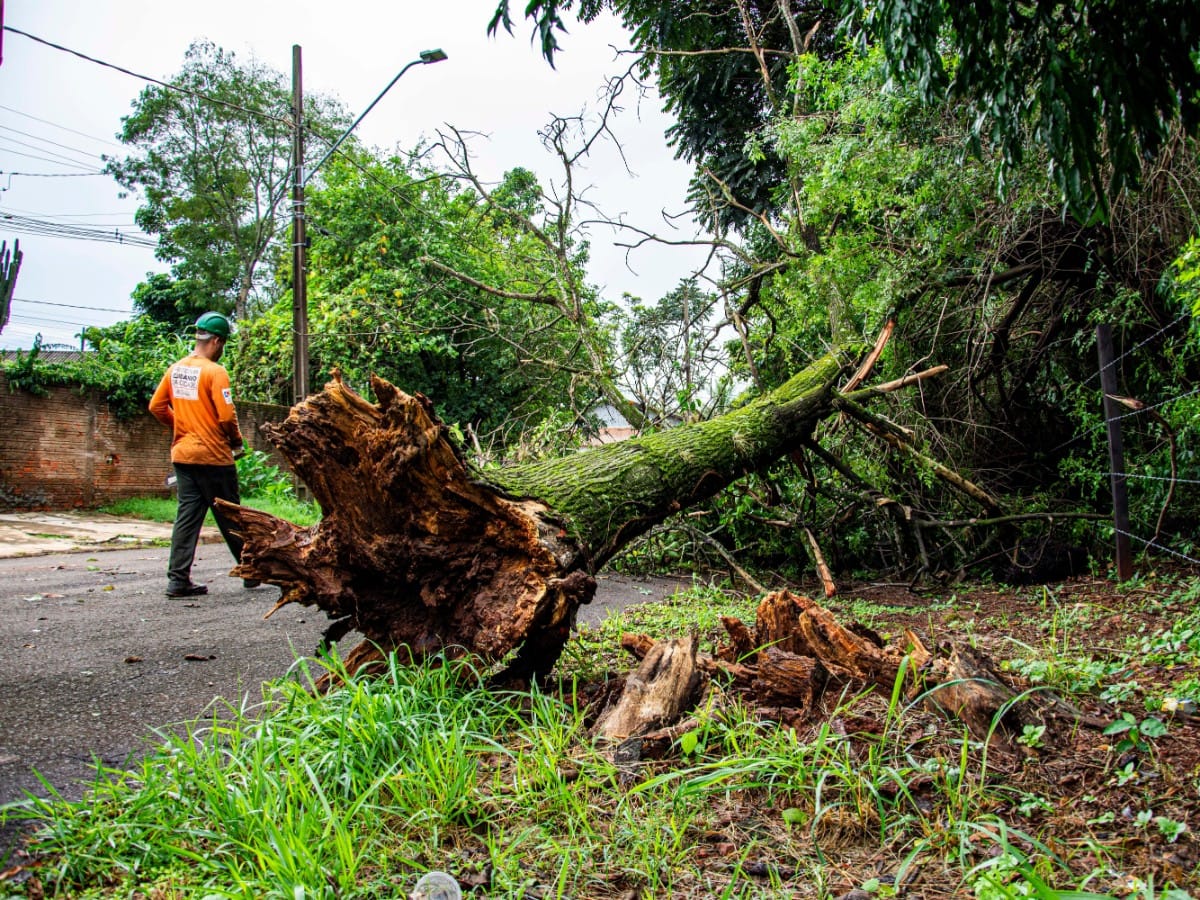
Most published figures put an emergency removal between a few hundred dollars for a small tree and $5,000 to $8,000 for a large tree that landed on something. The range is wide because emergency work is priced on hazard and access, not just height: an oak lying across open lawn and the same oak through a carport roof are two different jobs.
As of October 2026, these are the most specific emergency figures published for Florida and the U.S.:
| Source | Where it applies | Emergency price | Published |
|---|---|---|---|
| Frank’s Tree Service (the table Google’s AI Overview repeats) | National | Under 30 ft: $300-$800 30-60 ft: $800-$1,800 60-80 ft: $1,500-$3,000 Over 80 ft: $2,000-$5,000 | March 2025 |
| Tree Maid | Palm Beach County | Small fallen tree: $500-$1,000 Medium tree on a structure: $1,200-$3,000 Large tree through a roof: $3,000-$7,000+ | About July 2026 |
| Florida’s Tree Masters | Volusia County area | Large fallen tree: $1,500-$8,000 | Undated |
| GoTreeQuotes | National | Typical $1,250-$6,150, average $2,450; after-hours jobs up to $10,500 | About July 2025 |
None of these sources prices work in Brevard County. Dates are the best available; two pages show none.
TR Lawn & Tree prices each emergency job on site after seeing the tree, what it hit and how a crew can reach it, and the estimate is free. The emergency tree removal page shows how that work runs, and our guide to tree removal pricing in Brevard covers planned removals.
How much more does emergency work cost than a scheduled job?
Sources disagree. Published premiums run from 20% above a normal job to three times the normal price, and one Florida company says it adds no flat surcharge at all.
The premium covers real costs: crews pulled off scheduled work, trees under tension or resting on a structure, and call-out minimums of $250 to $500 at some companies, according to ArboStar’s July 2026 pricing guide. ArboStar also reports prices 25% to 100% higher in the weeks after a major storm.
After-hours work sits at the top of the range. GoTreeQuotes lists after-hours jobs up to $10,500, and Angi’s Orlando data adds $100 to $150 an hour for emergency work.
What drives the price of an emergency tree job
Seven things set most of an emergency bill:
- What it hit. A tree on a roof, pool cage or fence comes apart piece by piece so nothing else breaks. A tree on open lawn is cut on the ground.
- Access. Fenced backyards and soft ground slow the job. A boom lift lets a crew cut from above instead of climbing a broken tree.
- Species and size. Laurel oak and sand pine fail in wind more often than live oak or sabal palm, per UF/IFAS hurricane surveys, and big hardwoods weigh more to rig and haul.
- Power lines. The utility goes first; tree work waits until the line is safe.
- Debris. Angi’s Orlando figures put one dump trip at $75 to $250.
- Billing. ArboStar advises time-and-materials billing during active storm response and fixed bids once cleanup settles down.
- The stump. Emergency work stops at making the site safe. Grinding is a separate line you can schedule later.
TR Lawn & Tree runs emergency jobs on its own 62-foot boom lift, grapple trucks and mini loader, so no subcontracted crane lands on the invoice and the debris leaves with the crew. All of TR’s storm work is listed under emergency and storm services.
Who to call first, and what to document
Pick what the tree hit to see who to call first, what to photograph and what drives the price.
A power line
- Call first
- 911 if a line is down or sparking, or FPL at 1-800-4OUTAGE (1-800-468-8243). Keep everyone back.
- Document
- Photos from a safe distance.
- What drives the price
- The tree waits until the utility makes the line safe. FPL restoration crews leave tree debris where it falls, so removing the rest is the owner’s job.
My house, garage, pool cage or fence
- Call first
- Your insurer, once everyone is safe. Say so if the roof is open to rain.
- Document
- Wide and close photos of the tree, the damage and the trunk base before any cutting.
- What drives the price
- Piece-by-piece removal. Removal coverage is often capped at about $500 to $1,000 (Insurance Information Institute).
Only my driveway or ramp
- Call first
- Your insurer. Some policies pay to clear a blocked driveway or ramp even when nothing else was hit.
- Document
- Photos of the blocked access and where the tree came from.
- What drives the price
- A ground job: trunk size and haul volume set the price.
Nothing, it fell in the yard
- Call first
- A tree company, when it suits you. A stable tree in open yard is not an emergency.
- Document
- A few photos for your records.
- What drives the price
- Insurance generally pays nothing here, so scheduling the job instead of rushing it avoids emergency rates.
One more question changes the insurance math: was it a named hurricane? The next two sections cover both cases.
Does homeowners insurance pay for tree removal after a storm?
Usually, only when the tree damages an insured structure such as the house, a detached garage or a fence. In that case most policies pay for removal up to a limit, often about $500 to $1,000, according to the Insurance Information Institute. If the tree fell and hit nothing, removal is generally not covered, and the cost of fallen tree removal falls on you.
A common policy form caps removal at $1,000 per loss and $500 per tree. Structure repair is paid separately; Consumer Reports found its members’ median paid tree claim was $4,110.
If the tree came from a neighbor’s yard
You still file with your own insurer, which may then recover the money from the neighbor’s insurer through subrogation.
Deadlines and who files
Florida gives you one year to report a new property claim and 18 months for a supplemental one. You file the claim yourself; the FAQ below explains why a tree company cannot.
What TR gives you for the claim
When you need it for a claim, TR Lawn & Tree provides before-and-after photos of the job and an itemized invoice.
How Florida’s hurricane deductible changes the math
A named hurricane triggers a separate deductible in Florida, usually a percentage of your dwelling coverage instead of a flat dollar amount. Florida’s options are $500, 2%, 5% and 10%. On a $200,000 home with a 2% hurricane deductible, you pay the first $4,000 yourself.
| Storm | Deductible that applies | What it means for the tree bill |
|---|---|---|
| Named hurricane | Hurricane deductible: $500, or 2%, 5% or 10% of dwelling coverage | At 2% on a $200,000 home, the first $4,000 is yours. A $2,500 removal plus a small roof repair may never reach it. |
| Thunderstorm, lightning or wind that is not a named hurricane | Your policy’s standard deductible | If the tree hit a structure, removal coverage (often $500 to $1,000) applies after the standard deductible. |
Source: Florida Department of Financial Services; section 627.701, Florida Statutes. Your declarations page shows yours.
This is common. After Hurricane Milton, Florida’s Office of Insurance Regulation counted 264,763 residential claims, Newsweek reported in early 2025; 104,789 closed without payment, 45,725 of them below the deductible.
Milton crossed Brevard as a Category 1 in October 2024 and remains Florida’s most recent hurricane landfall.
Who hauls the debris, and what it costs
Brevard County collects storm debris that residents cut and set at the curb, at no charge. Debris from a contractor you hire is different: the County requires the contractor to haul it away, which makes hauling the biggest local swing in cleanup cost.
The County’s published rules, as of October 2026:
- Cut debris into 4-foot lengths and set it on the public right-of-way, clear of poles, transformers, meters, drains and hydrants.
- Collection starts a few days after the storm, seven days a week; the first pass takes vegetative debris only.
- Do not cut trees or set anything at the curb in the 72-hour window around landfall.
- Residents can drop storm debris free at the Central Disposal Facility in Cocoa, Sarno Road Landfill in Melbourne and Mockingbird Way Mulching Facility in Titusville, 7:30 a.m. to 5:30 p.m., Monday through Saturday.
TR Lawn & Tree hauls off everything it cuts or turns it into mulch, and never burns debris on site. For whole-property cleanup after a named storm, see hurricane tree cleanup. Check your city’s storm notice too; this guide follows the County’s rules.
What counts as a tree emergency, and when can it wait?
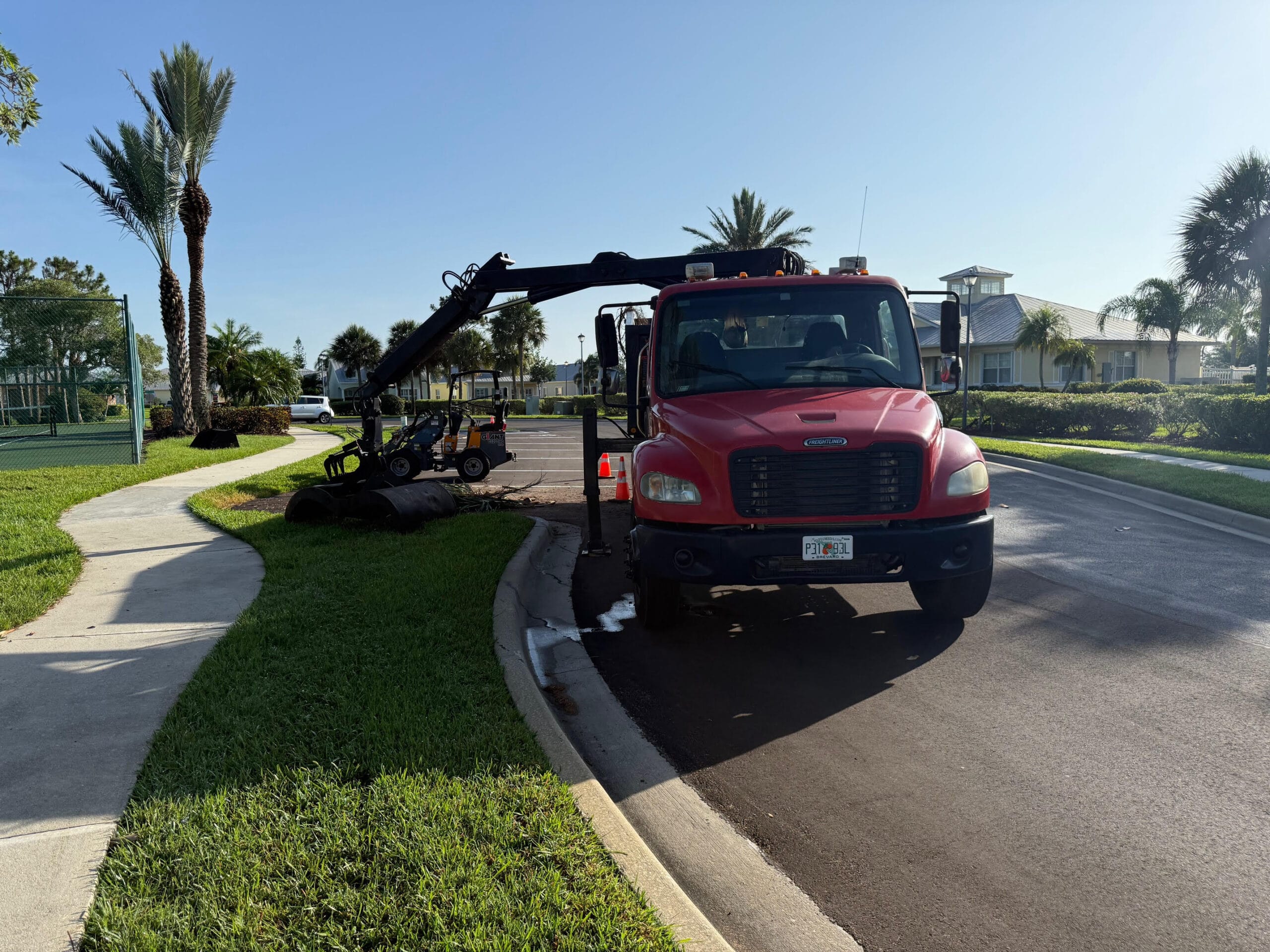
A tree emergency is a tree or limb causing damage now, or one that could fall on people, a structure or a road at any moment. If nothing is moving and nothing is at risk, the job can wait for a normal schedule and a normal price.
Call now if
- A tree is on the house and the roof is open to rain
- A tree blocks your only driveway or a road
- A broken limb hangs over a walkway, driveway or roof
- A tree leans onto a house, or touches a power line (call 911 or FPL first)
It can usually wait if
- The tree fell into open yard and nothing is under it
- The trunk is stable and the soil at its base has not heaved up
Waiting pays: ArboStar reports off-season discounts of 15% to 25%. For damaged trees still standing, see storm damage tree removal.
Price gouging: Florida’s rule during a declared emergency
During a declared state of emergency, Florida’s price gouging law (section 501.160) covers services, tree work included. A price grossly above the 30-day average before the declaration is presumed unconscionable unless the seller’s own costs rose.
Selling services during a declared emergency without a business tax receipt is a misdemeanor under the same law. Ask any crew that knocks after a storm for its business tax receipt and proof of insurance, and report suspected gouging to the Florida Attorney General.
What happens when you call TR Lawn & Tree
TR Lawn & Tree is licensed and insured, based in Cocoa (Port St. John), and has worked in Brevard County for more than 30 years, serving Cocoa, Cocoa Beach, Merritt Island, Mims, Titusville, Rockledge, Palm Bay and Melbourne.
- Call 321-504-1054 and describe what the tree hit. Photos help.
- We look at the tree, the access and what is under it, then give you a free estimate before work starts.
- The crew takes the tree down with the lift, grapple truck or mini loader and hauls the debris.
Emergency tree removal questions
What should I do first if a tree falls on my house?
Get everyone out of the damaged area, stay clear of wires, and call 911 or FPL at 1-800-4OUTAGE if a line is down. Photograph the tree, the damage and the base of the trunk before anything is cut, then call your insurer. Call TR Lawn & Tree at 321-504-1054 next and say if rain is getting in. TR gives you before-and-after photos and an itemized invoice for the claim.
How much does it cost to haul away tree branches after a storm?
If you cut the branches into 4-foot lengths and set them at the curb, Brevard County collects storm debris at no charge. When TR Lawn & Tree does the cutting, hauling is part of the job: the crew loads the debris into its own grapple trucks and hauls it off or turns it into mulch. Nothing is left at the curb, and nothing is burned on site.
Can a tree company bill my insurance company directly?
Not under Florida policies issued on or after January 1, 2023. Florida banned assignment of benefits for those policies, so a contractor can no longer take over your claim. You file, the contractor bills you, and your insurer pays you. TR Lawn & Tree provides before-and-after photos and an itemized invoice to support your claim.
Do I need a permit to remove a storm-damaged tree in Brevard County?
It depends on your city and the tree. Florida law (section 163.045) lets single-family homeowners skip local permits when an ISA certified arborist or a Florida licensed landscape architect documents that the tree poses an unacceptable risk. The owner obtains that documentation, and TR does the removal. Our Florida land clearing permit guide covers county and city rules.
Does FPL remove a tree that fell on a power line?
FPL makes the line safe and clears what is touching its equipment, but its restoration crews leave tree debris where it fell. Removing and hauling the rest is the property owner’s job. Once FPL says the line is safe, TR Lawn & Tree’s crews, who are qualified for tree work near power lines, can take the tree down and haul it away.
Tree down in Brevard County?
Call TR Lawn & Tree at 321-504-1054, or book a free estimate online.
Prices, statutes and County rules in this guide were checked in October 2026. Insurance terms vary by policy, so read yours or ask your agent.