Dead tree removal in Cocoa & Brevard County
A dead tree doesn't get safer with time. It gets more brittle, more expensive to take down, and closer to the next storm.
- 5.0 on Google reviews
- 30+ years in Brevard
- Licensed & insured
Eight signs it's past saving.
8 signs
-
01Get it assessed
No leaves when the neighbors have them
Bare in June while everything around it is green. In Florida that isn't dormancy.
-
02See disease ID
Bark sloughing off in sheets
Smooth bare wood underneath means the layer that moves water is already gone.
-
03See disease ID
Mushrooms or conks at the base
A shelf fungus on the trunk means the inside has been rotting for a while.
-
04See trimming
Brittle deadwood through the canopy
Twigs that snap instead of bend, and grey limbs with no buds on them.
-
05Get it assessed
Limbs dropping on their own
Wood on the lawn after a calm night is the tree shedding weight it can't hold.
-
06Emergency service
A new lean or lifted soil
Cracked or heaving ground on one side means the root plate is letting go.
-
07Emergency service
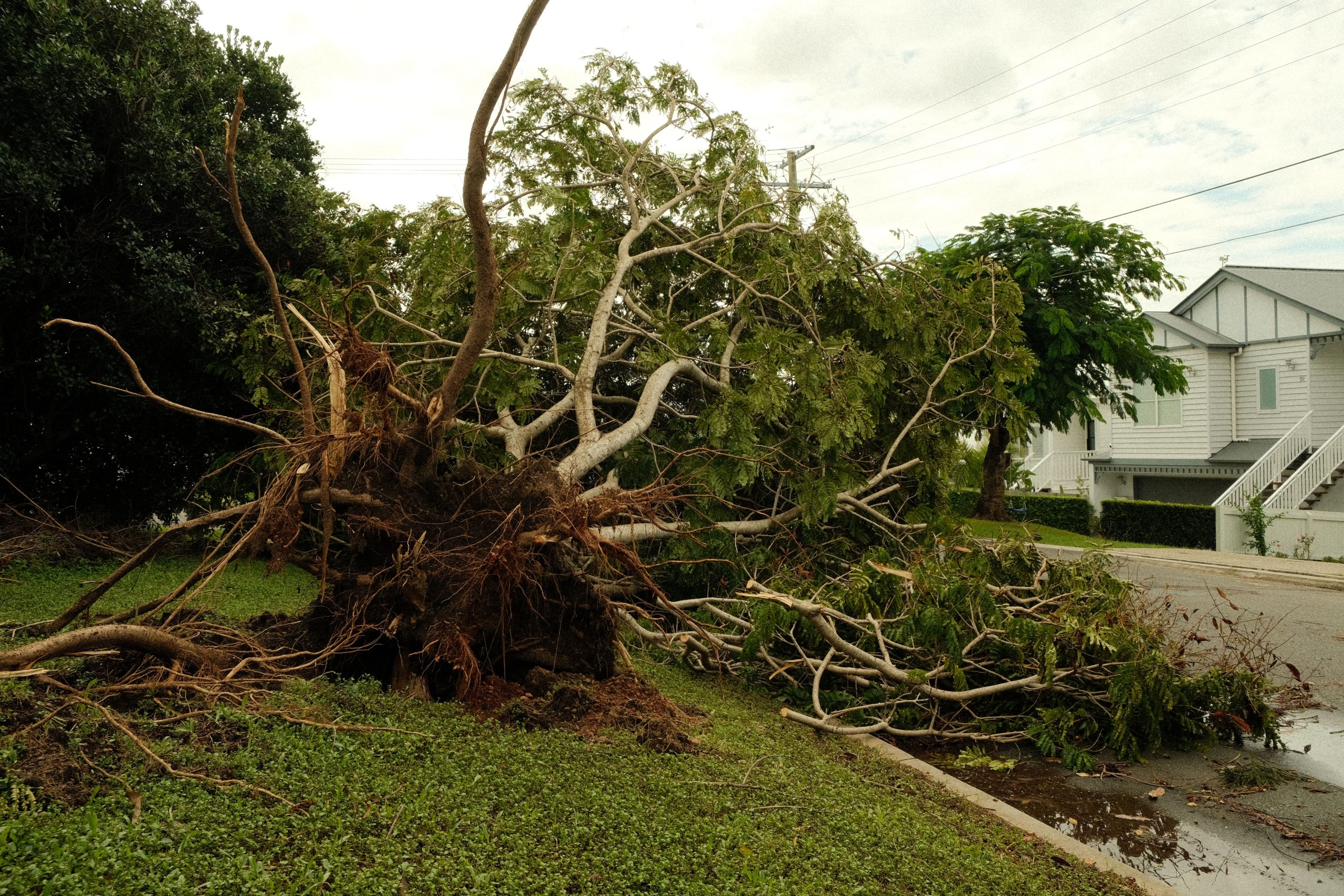
Storm-snapped or split trunk
A hollow, cracked or half-broken trunk won't heal. It just waits for the next gust.
-
 08See disease ID
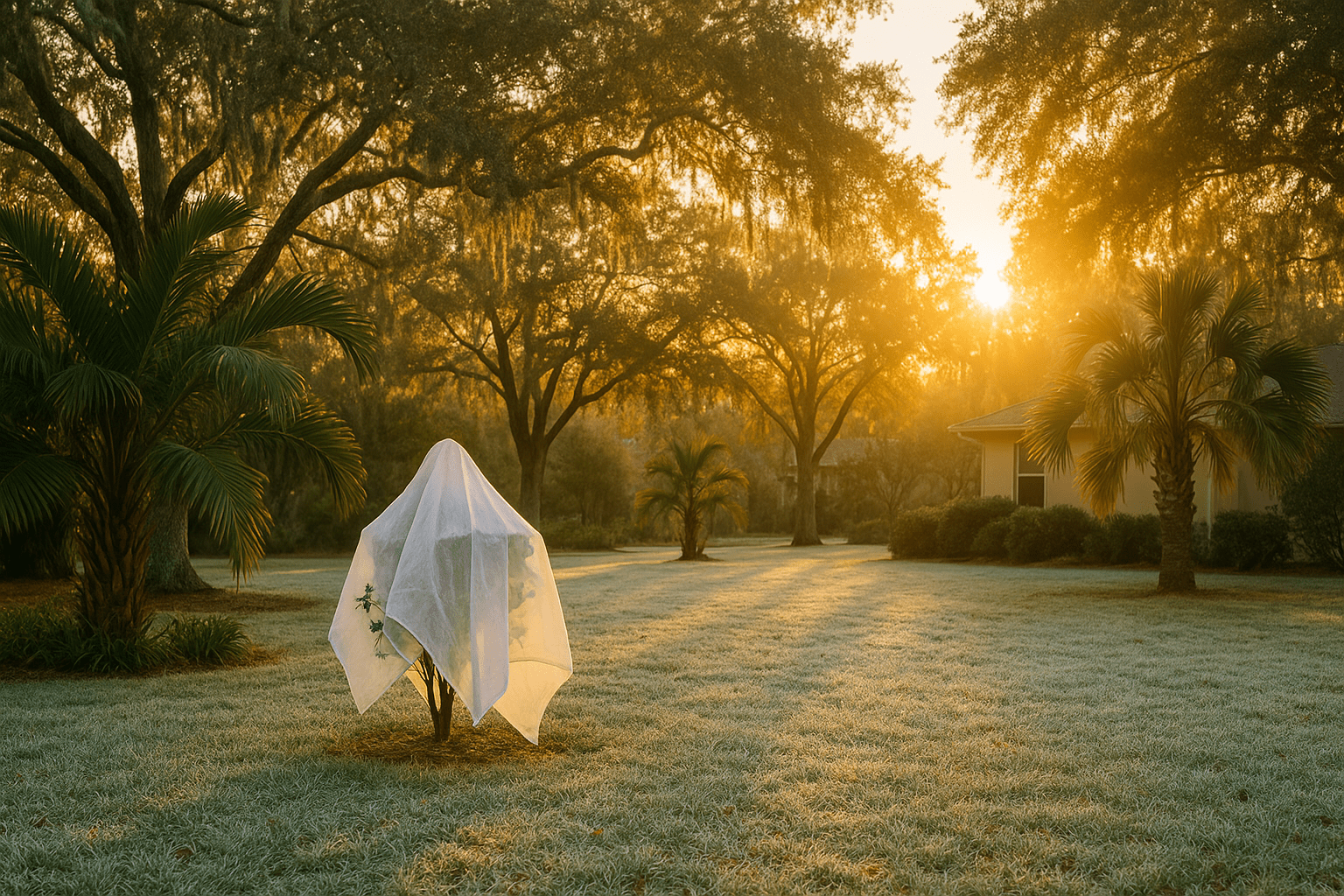
A palm browning from the top down
Fronds collapsing and the spear pulling loose points to a palm that's finished.


A dead tree is a different job than a live one.
Live wood bends, holds a rope and takes a climber's weight. Dead wood does none of that. It fails without warning, in pieces, usually at the union you were counting on. That changes how the tree comes down and it's the reason a lot of crews quote a dead oak the same as a live one and then find out mid-job.
Nobody climbs a dead tree.
Decayed wood won't hold a tie-in point, so the work happens from the 62-foot boom lift or off a crane, with sections roped down instead of dropped. It's slower and it's the only way to do it without gambling on wood that's already failed once.
Dead, dying and dormant look alike here.
A freeze browns a palm, a wet summer stresses an oak, and both can look finished in January and push growth in March. We scratch the cambium and read the canopy before recommending anything, and if there's still green under the bark we'll tell you to wait.
Brevard's code may already require it.
In unincorporated Brevard, county code makes a dead standing tree a nuisance when it's within 25 feet of an improved property line or a road and taller than that distance, and the duty to remove it sits with the owner. Cities set their own rules. It's a common code complaint here, and it's cheaper to handle before a notice arrives than after.
The stump is part of the problem.
A dead stump is already soft, which is exactly what termites and fire ants are looking for. Grinding it while the equipment is on site costs less than a second trip, and it leaves ground you can sod or replant.
Storm season is the real deadline.
Dead trees are the ones that come down in June through November, and after a named storm every crew in the county is triaging live emergencies. The same tree removed on a dry Tuesday costs less and doesn't take the fence with it.
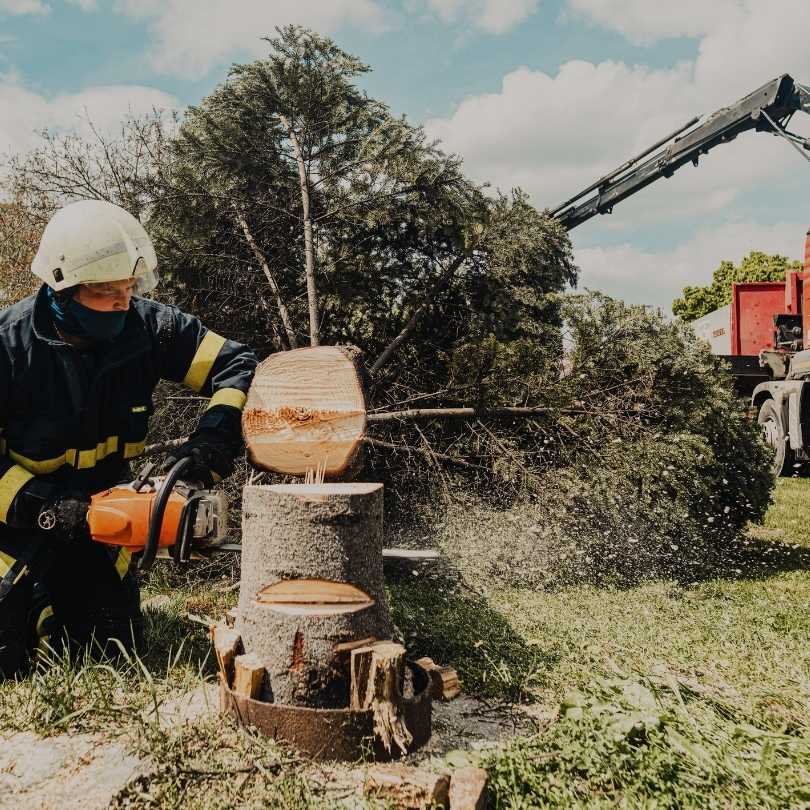
Proof, not promises
“They maintain two large live oaks for us and have done two major yard renovations. There's a reason my first call is to Tim any time I have an idea.”
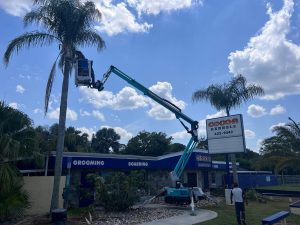
We own the heavy iron.
No waiting on a rental. Tap a machine for what it does on a dead tree.
-
Dead wood can't be climbed. The lift puts a cutter next to the canopy without any weight going on the tree itself.
-
Hydraulic arms take whole trunk sections straight off the ground and into the truck, so brittle wood is handled once.
-
Moves heavy pieces out of a back yard without tearing up the lawn on the way.
-
Take the stump below ground level so it stops feeding termites and won't send up shoots.
-
Turns the limbs into mulch on site, which cuts what has to leave the property.
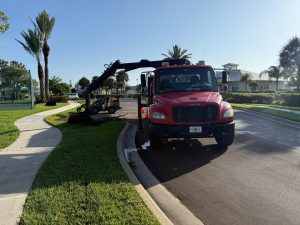
Dead oaks, snapped pines and finished palms.
Before-and-after photos from real removals in Cocoa, Merritt Island, Rockledge and the beaches.
See the galleryWhat does dead tree removal cost in Brevard?
Rough numbers below, real numbers after a free on-site look. Price moves with height, access, what sits underneath and how far the decay has gone.
We service all of Brevard County.
Titusville to Palm Bay, mainland and beaches. Based in Cocoa, so most of the county is under 40 minutes away, and leaning or split trees get routed by who's closest.
-
No leaf-out in season, bark peeling to bare wood, twigs that snap instead of bending, and no green under a scratched twig. Fungus at the base or a hollow sound when the trunk is struck says the inside is gone even if part of the canopy still looks alive. One dead limb is a pruning job; a whole tree with none of those signs reversing is a removal.
-
Sometimes. After a freeze or a bad drought a stressed tree will hold bare for weeks and then push new growth. That's why we scratch-test the twigs and check the cambium before recommending anything. If there's green under the bark it gets a chance, and we'll say so.
-
Yes, and that's the situation we'd rather get to first. Decayed trees don't get climbed, so we work from the boom lift or bring a crane and lower sections on ropes rather than dropping them. Nothing free-falls onto the roof or the pool cage.
-
We can, and on a dead tree it's usually worth doing in the same visit. A rotting stump attracts termites and fire ants, and grinding it while the equipment is already on site costs less than a separate trip.
-
In unincorporated Brevard it can. County code section 114-28(c) makes a dead standing tree a public nuisance when it sits within 25 feet of an improved property line or a road right-of-way and is taller than that separation, and it puts the duty to remove it on the property owner. If you're inside a city, that city's ordinance governs instead. We'll tell you which applies to your parcel, but check with the county or your city for a decision on your specific property.
-
Often not, or the fee gets waived, because dead and hazardous trees are treated differently from healthy protected ones. Florida law also lets a homeowner skip some local permitting when a qualified arborist documents that a tree is an unacceptable risk. Rules differ by city and by parcel, so treat this as a starting point rather than legal advice. We'll point you to the right office before anything is cut.
-
Most Brevard removals land between $800 and $2,200, with small trees at $350 to $750 and large or complex ones from $2,200 up. A dead tree is priced the same way as a live one: height, access, what sits underneath, and how much has to be hauled. Use the calculator above for a ballpark, then we confirm it in writing on site.
-
Not always, and often the opposite. There's less canopy to cut, which helps, but decayed wood can't be climbed and can't be rigged as hard, so the job moves to a lift or a crane and gets slower and more careful. A dead tree caught early is cheaper than the same tree two years later.
-
Trees that are leaning, split or hanging over something get moved up the schedule ahead of routine work. Call rather than using the form for those, and describe what you're seeing or send a photo so we know what to bring.
Get it looked at.
Free estimate, in writing, no pressure and no obligation. Send a photo if it's easier.