Trees and power lines guide
Tree Removal Near Power Lines in Florida: Who Do You Call?
30-second summary
Who handles tree removal near power lines depends on which wire the tree is near. In Brevard County, FPL keeps its street lines clear for free and handles every downed or sparking line. The line from the pole to your house is the owner’s to keep clear, and tree work more than 10 feet from every line can go to any licensed, insured tree company.
- Line down, sparking or a tree resting on it: stay back and call 911 or FPL at 1-800-4OUTAGE (1-800-468-8243).
- Lines running pole to pole along the street: FPL trims them on a cycle, at no charge.
- The service drop to your house: you hire a qualified line-clearing crew, and FPL disconnects and reconnects the line for free if the work needs it.
- Within 10 feet of a line, OSHA allows only workers qualified for line-clearance work. TR Lawn & Tree’s crews are qualified.
Which wire is the tree near?
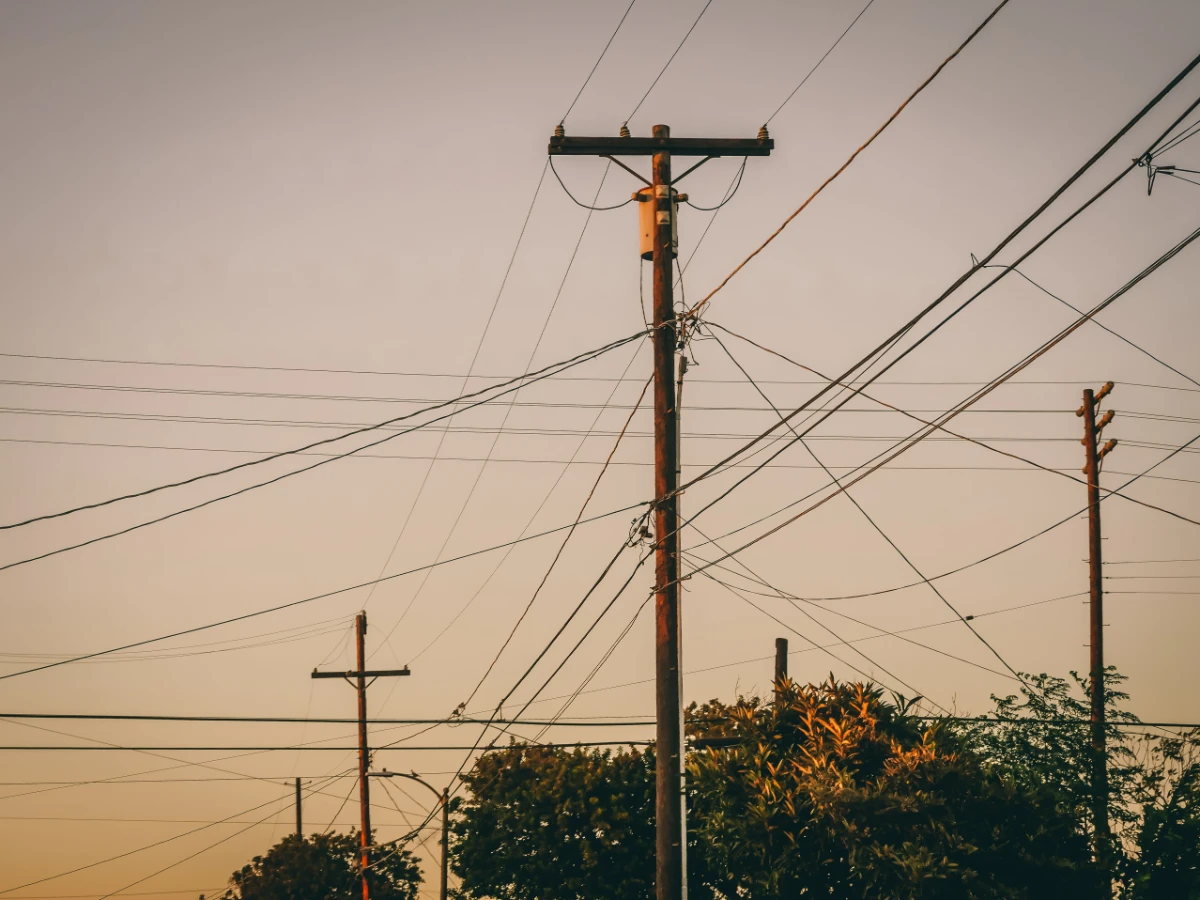
Most confusion comes from treating every overhead wire as FPL’s problem. There are four kinds of line around a Brevard home, and each one has a different first call.
Pick the situation that matches yours:
Down, sparking or a tree on it
- Call first
- 911, or FPL at 1-800-4OUTAGE (1-800-468-8243). Stay far back and assume every wire is energized.
- Who pays
- The utility handles the line. FPL restoration crews leave tree debris where it falls, so the rest of the tree is the owner’s.
- When a tree crew comes in
- Only after FPL says the line is safe.
A street line, pole to pole
- Call first
- FPL, through the request on its tree page (Report a Tree-Related Concern).
- Who pays
- FPL. It trims around its lines at no charge.
- Timing
- On FPL’s cycle: main lines about every 3 years, neighborhood lines about every 6. A report may feed FPL’s planning rather than bring a truck right away.
The line to my house
- Call first
- A tree crew qualified for line-clearance work. TR Lawn & Tree’s crews are.
- Who pays
- The property owner.
- If the line must be shut off
- FPL disconnects and reconnects it for free through its Project Portal, booked 1 to 2 weeks out. TR does not file that request, so book it yourself.
A cable or phone line
- Call first
- The company that owns the line.
- Note
- TR Lawn & Tree does not work around cable or phone lines.
Nothing within 10 feet
- Call first
- Any licensed, insured tree company.
- Why
- This is ordinary tree work, as long as the crew and its equipment stay at least 10 feet from the lines, and farther from transmission lines.
Who is responsible for trimming trees near power lines in Florida?
FPL is responsible for keeping trees clear of its own lines in Brevard County, and it does that work at no charge. The property owner is responsible for the service drop to the house and for trees within 10 feet of a line that FPL chooses not to trim, which FPL says the customer must have trimmed by a qualified tree trimmer.
| Line | Who keeps trees clear | Who pays |
|---|---|---|
| Main feeder lines on the street | FPL, about every 3 years on average | FPL |
| Neighborhood lateral lines | FPL, about every 6 years on average | FPL |
| Trees within 10 ft of a line that FPL does not trim | Property owner, using a qualified tree trimmer | Owner |
| Service drop, pole to house | Property owner, using a qualified line-clearing professional | Owner; FPL’s disconnect is free |
Source: FPL tree FAQ, FPL line-clearing page and FPL Project Portal, checked October 2026.
FPL mails a letter about two weeks before crews trim in an area. Its crews use directional pruning, cutting branches back so new growth points away from the lines, which leaves the V-shaped cut many homeowners call butchered. FPL removes only select trees, palms and fast-growing plants it cannot manage by pruning, and it asks for consent first.
To ask FPL to look at a tree, use the request on FPL’s tree page, now labeled Report a Tree-Related Concern. An older FPL brochure says the utility does not schedule individual trimming requests, so expect a report to feed its planning. Palm Bay’s city directory sends residents to FPL at 1-800-226-3545. 211 Brevard lists FPL as the electric provider for all of Brevard County; if your bill comes from another utility, call that utility.
Trees FPL leaves alone become ordinary tree trimming or tree removal jobs, once you know who is allowed to work near the line.
The line from the pole to your house
The service drop is the wire from the pole to your house. FPL owns it, but keeping trees off it is the owner’s job: FPL’s construction portal says the property owner must hire a qualified line-clearing professional to trim near it.
If the work needs the line de-energized, FPL disconnects and reconnects it for free. You apply through FPL’s Project Portal, which handles single-phase residential service, and appointments run about one to two weeks after the application. TR Lawn & Tree does not file that request, so plan on booking it yourself.
Plenty of tree companies will not touch the line to the house. A Florida homeowner on JustAnswer described a hired trimmer who refused the limbs over the power lines. That usually means the crew is not qualified for line-clearance work, not that the job cannot be done.
How far should trees be from power lines?
FPL tells people to keep themselves and anything they hold at least 10 feet from main and neighborhood power lines and 30 feet from higher-voltage transmission lines. That includes ladders, pole saws and the branch being cut.
| What | Distance | Source |
|---|---|---|
| You and anything you hold, main and neighborhood lines | 10 ft | FPL |
| You and anything you hold, transmission lines | 30 ft | FPL |
| Equipment near lines up to 50 kV | 10 ft | OSHA, cited by FPL |
| Equipment near lines of 50 to 200 kV | 15 ft | OSHA, cited by FPL |
| Clear zone around a pad-mount transformer (the green box) | 8 ft in front, 3 ft at the back and sides | FPL |
| Trees FPL says can be planted next to lines | Under 20 ft tall at maturity | FPL brochure |
Sources: FPL tree-location and working-near-power-lines pages (OSHA 1926.1408 table), FPL South Florida planting brochure (2018). Checked October 2026.
Planting distances are less settled. Florida Public Utilities wants fast-growing trees at least 20 feet from lines, and Angi suggests 25 feet for mature trees. Florida law (section 163.3209) bars local governments from requiring trees that will grow taller than 14 feet in an established utility right-of-way.
Palms need their own mention: FPL’s brochure names them one of the most common causes of outages and flickers. If one is already brushing a line, see palm tree trimming.
Can I remove a tree branch from a power line?
No. FPL tells customers not to remove tree limbs or anything else from a downed line and to assume every wire is energized. Call 911 or FPL at 1-800-4OUTAGE and keep everyone away until the utility makes it safe.
A branch resting on a live line in the yard follows the same rule. OSHA requires workers who are not qualified for line-clearance work to stay at least 10 feet from overhead lines, and it defines line-clearance tree trimming as work within 10 feet of lines up to 50 kV. A homeowner with a pole saw is the unqualified worker in that rule.
Some guides say only FPL or a certified arborist may work near lines. OSHA’s test is line-clearance qualification, not an arborist certificate, and TR Lawn & Tree’s crews are qualified for tree work near power lines. If a storm put a tree on a line, see emergency tree removal for what happens once FPL makes it safe.
What tree removal near power lines costs
FPL’s line clearing and its service-drop disconnect cost the homeowner nothing. Private tree work near a line costs more than the same job in an open yard: Angi puts removal in a tight or unsafe spot, including near power lines, at 25% to 50% more, and large trees near lines at up to $10,000.
| Item | Typical cost | Source |
|---|---|---|
| FPL trimming around its own lines | Free | FPL tree FAQ |
| FPL service-drop disconnect and reconnect | Free | FPL Project Portal |
| Tree removal in a tight or unsafe spot, including near lines | 25% to 50% above a normal removal | Angi, 2026 data |
| Large tree near power lines | Up to $10,000 | Angi, 2026 data |
| Emergency removal, such as a tree on a power line | $450 to $3,000 | Lawn Love, 2026 |
| Average tree removal, any location | $750 | Angi, 2026 data |
All national figures, checked October 2026. No Florida or Brevard source publishes near-line prices.
TR Lawn & Tree prices each job after seeing the tree, the line and the access, and the estimate is free.
Permits, easements and Florida law
Florida law keeps cities and counties out of routine utility trimming. Under section 163.3209, once an electric utility right-of-way exists, local governments cannot require permits for vegetation maintenance and pruning inside it. Removing trees outside the right-of-way still falls under local rules.
Section 163.045 matters for dangerous trees. A local government cannot require a permit, fee or replanting to remove a tree on single-family residential property when the owner has signed documentation from an ISA certified arborist or a Florida licensed landscape architect that the tree poses an unacceptable risk. The owner obtains that assessment, and TR Lawn & Tree does the removal. Our Florida land clearing permit guide covers county and city rules.
If the tree is a neighbor’s, FPL can still trim it to protect the line. WSVN reported that FPL removes such a tree only when it cannot be trimmed or the owner agrees.
After the tree comes down: stumps, 811 and debris
Call Sunshine 811 at least two full business days before stump grinding, not counting the day you call. Grinding counts as digging, and Peoples Gas specifically tells Floridians to call 811 before grinding stumps after storms.
Debris depends on who cut the tree. After scheduled trimming, FPL collects its debris by the end of the next day, except during storm restoration. After a storm, FPL crews clear only what touches electrical equipment and leave the rest where it fell. TR Lawn & Tree hauls off everything it cuts. For the stump, see stump grinding.
How TR Lawn & Tree handles trees near power lines
TR Lawn & Tree is licensed and insured and has worked in Brevard County for more than 30 years from its base in Cocoa (Port St. John). Its crews are qualified for tree work near power lines, and the 62-foot boom lift lets them cut from above instead of climbing into a tree that leans on a wire.
- Trims and removes trees near power lines and the service drop
- Hauls off every branch and log it cuts
- Works in Cocoa, Cocoa Beach, Merritt Island, Mims, Titusville, Rockledge, Palm Bay and Melbourne
- Does not file FPL disconnect requests and does not work around cable or phone lines
Power line tree questions
Does FPL charge to trim trees near power lines?
No. FPL says it does not charge for trimming around its lines because protecting its lines and equipment is its responsibility. The exceptions are trees within 10 feet of a line that FPL decides not to trim and the service drop to your house. Those are the property owner’s to have trimmed by a qualified tree trimmer, at the owner’s cost.
How often does FPL trim trees in my neighborhood?
On average, FPL clears its main feeder lines about every three years and neighborhood lateral lines about every six years. It does most scheduled clearing before the height of storm season and mails a letter about two weeks before crews arrive. A tree that grows into the lines between visits can be reported through FPL’s tree page.
Why did FPL cut a V shape in my tree?
That is directional pruning. FPL’s crews cut branches back to points that steer future growth away from the lines instead of shearing the whole crown, which leaves the V or L shape homeowners notice. FPL follows the ANSI A300 pruning standard. If the cut left the tree lopsided, a tree company can shape the rest of the canopy.
Who removes a tree that fell on a power line during a storm?
FPL handles the line first, so call 911 or 1-800-4OUTAGE and stay away. FPL’s restoration crews clear what is touching their equipment and leave the rest of the tree where it fell. Removing and hauling the rest is up to the property owner, who can hire a tree company once FPL says the line is safe.
Can FPL trim my neighbor’s tree if it is growing into the lines?
Yes. FPL can trim a tree that threatens its lines no matter whose yard it stands in. WSVN reported that FPL removes such a tree only when it cannot be managed by trimming or the owner allows it. Report the tree through FPL’s tree page and FPL decides when it fits the trimming schedule.
Tree near a power line in Brevard County?
Call TR Lawn & Tree at 321-504-1054, or book a free estimate online.
FPL programs, phone numbers, distances and statutes in this guide were checked in October 2026.